

Dubai stands at the center of global trade. With the largest port in the Middle East, one of the world’s busiest air cargo hubs, and a business environment designed for international commerce, it is no surprise that thousands of businesses rely on shipping companies in Dubai to move their goods across borders every day.
Whether you are an importer bringing goods into the UAE, an exporter shipping product to GCC markets, or an international business looking for a reliable freight forwarding partner, this guide covers everything you need to know from sea and air freight options to customs clearance, GCC shipping routes, and how to choose the right logistics company in Dubai for your specific needs.
At Sarab DXB, we have built our reputation on delivering end-to-end logistics solutions across the UAE and GCC. From air and ocean freight services to comprehensive IOR, EOR, and DDP services in Dubai, we manage every step of your supply chain so you can focus on growing your business.
Why Dubai Is the World’s Premier Shipping Hub
Before choosing among the many shipping companies in Dubai, it helps to understand why Dubai is positioned where it is in global trade and what makes this city the preferred gateway for goods moving between Asia, Africa, Europe, and the Americas.
Strategic Location at the Crossroads of Global Trade
Dubai sits at the geographic midpoint between East and West. Located on the Arabian Gulf, the city offers access to over two-thirds of the world’s population within an eight-hour flight. This unique position has made Dubai a natural transit hub for cargo moving across continents and a base of operations for global shipping companies serving markets from India to the UK.
Jebel Ali Port and Dubai International Airport
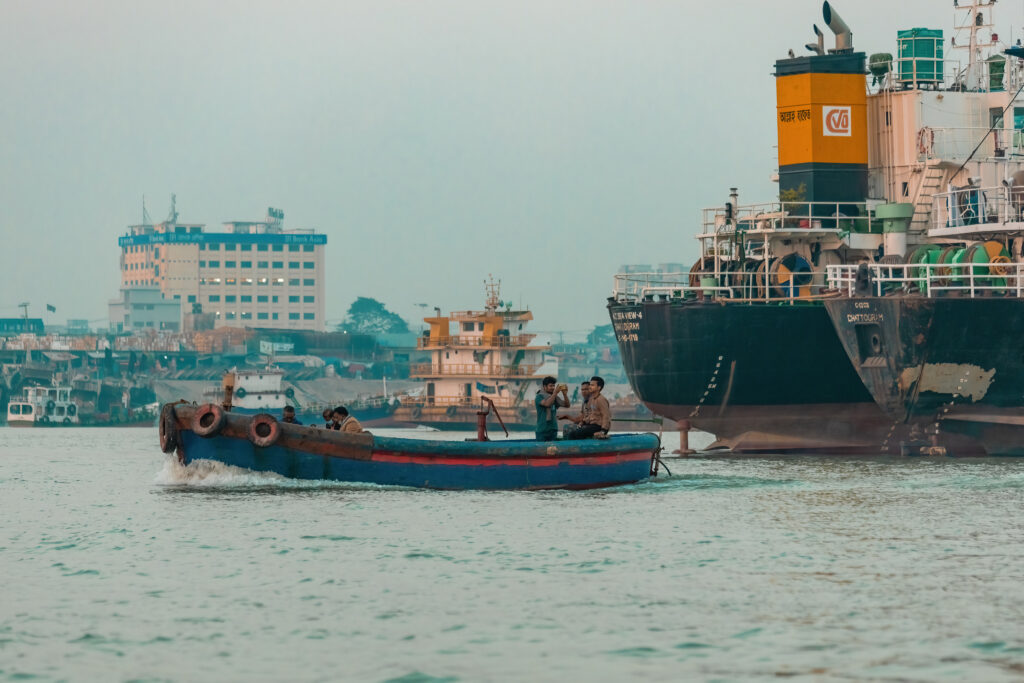
Jebel Ali Port, operated by DP World, is the largest man-made harbour in the world and the most productive container terminal in the Middle East. It handles tens of millions of TEUs annually, connects Dubai to over 150 global destinations, and operates with regular weekly sailing schedules to every major trade lane. For businesses importing or exporting goods by sea, Jebel Ali is the primary entry and exit point.
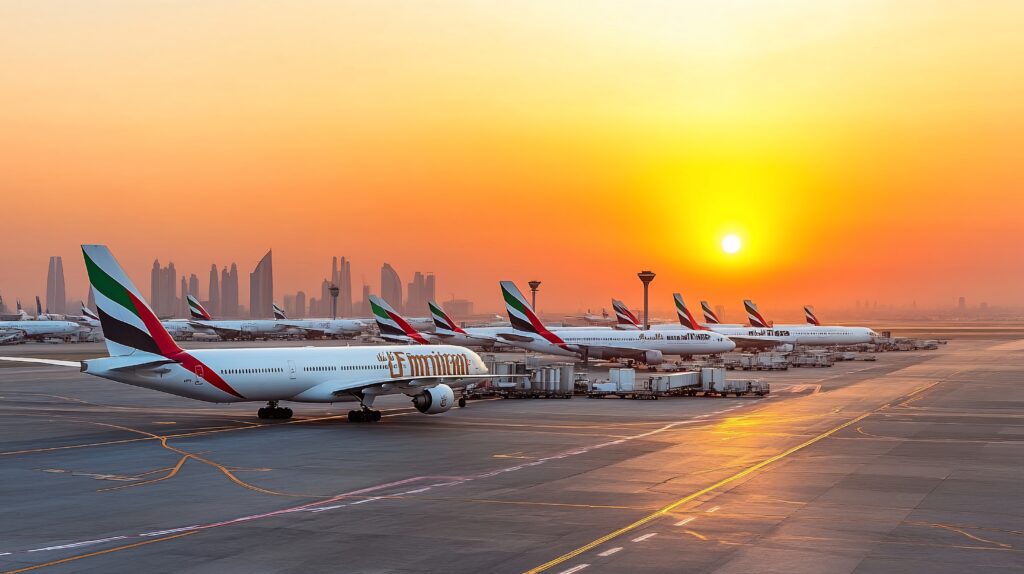
In the air, Dubai International Airport (DXB) is one of the top ten busiest air cargo hubs globally, handling over 2.2 million tons of freight annually. Emirates SkyCargo, the cargo arm of Emirates airline is among the world’s largest air cargo carriers, providing daily belly-hold and freighter services to over 150 destinations. For time-sensitive or high-value shipments, no other city in the region offers comparable air freight capacity.
Free Zones, the Dubai Logistics Corridor, and Business Infrastructure
Dubai’s 40+ free zones including Jebel Ali Free Zone (JAFZA), Dubai Airport Free Zone (DAFZA), and Dubai South Free Zone provide duty-free storage, simplified customs procedures, and flexible business structures that attract global traders and logistics operators. The Dubai Logistics Corridor connects Jebel Ali Port directly to Al Maktoum International Airport (DWC) via a customs-bonded road, enabling sea-to-air cargo transfers without a separate customs declaration a significant efficiency advantage for transit shipments.
What Does a Shipping Company in Dubai Do?
A shipping company in Dubai also commonly called a freight forwarding company — is far more than an organization that moves boxes from one place to another. In practice, they act as a comprehensive logistics architect, managing every aspect of your cargo’s journey across international borders.
Freight Forwarding Explained
A freight forwarder coordinates the movement of goods on your behalf by booking cargo space with carriers (shipping lines and airlines), selecting optimal routes, consolidating shipments where beneficial, and managing the entire logistics chain. Think of them as the travel agent for your cargo arranging every detail so you don’t have to.
Customs Clearance and Documentation
Every shipment entering or leaving the UAE must pass through a defined customs process. Shipping companies in Dubai that offer customs clearance services prepare and submit all required documentation commercial invoices, packing lists, certificates of origin, and customs declarations through the Mirsal-2 system (Dubai Customs’ electronic clearance portal). They calculate and pay applicable import duties (typically 5% of the CIF value) and VAT (5%), and manage any regulatory approvals needed for controlled or specialised goods.
Warehousing, Distribution, and Last-Mile Delivery
Beyond moving cargo, full-service shipping companies in Dubai offer warehousing and distribution services that store, manage, and dispatch goods to their final destinations. This is particularly valuable for businesses that need to hold inventory in the UAE before distributing to GCC customers. Door-to-door delivery where the shipping company manages every step from origin pickup to final delivery is increasingly the preferred arrangement for both importers and exporters.

Sarab DXB offers all of these services under one roof, with strategically located warehousing in Dubai and distribution networks covering the entire UAE and GCC region.
Sea Freight Services in Dubai
For large, heavy, or non-urgent cargo, sea freight from Dubai is the most cost-effective shipping method available. Jebel Ali Port’s global connectivity and DP World’s operational efficiency make sea freight through Dubai highly reliable, with competitive freight rates across all major trade lanes.
FCL vs LCL, Which Container Option Is Right for You?
When booking sea freight, the fundamental choice is between Full Container Load (FCL) and Less than Container Load (LCL). Here is a clear comparison:
| Criteria | FCL (Full Container Load) | LCL (Less than Container Load) |
| What it means | Your cargo fills an entire container | Your cargo shares a container with others |
| Minimum volume | Typically 15+ CBM or 10+ tons | Any size ideal under 15 CBM |
| Cost structure | Fixed container rate cheaper per unit at volume | Pay only for your space better for small cargo |
| Transit time | Faster no consolidation delays | Slightly longer due to consolidation/deconsolidation |
| Security | Higher exclusive use of container | Good but cargo shares space with others |
| Best for | Regular bulk importers, manufacturers, retailers | SMEs, e-commerce, sample shipments, startups |
Sarab DXB provides both LCL shipping services in Dubai and FCL ocean freight, with competitive all-in quotes from Jebel Ali Port to destinations worldwide.
Transit Times and Costs from Dubai by Sea
Understanding typical sea freight transit times helps plan your supply chain effectively:
- Dubai to GCC (Saudi Arabia, Qatar, Kuwait, Oman, Bahrain): 3–7 days by sea; 1–4 days by land freight
- Dubai to India / South Asia: 7–14 days
- Dubai to East Africa: 10–18 days
- Dubai to Europe: 18–28 days
- Dubai to North America: 30–42 days
- Dubai to East Asia / China: 15–22 days
Standard UAE customs duty on most sea freight imports is 5% of the CIF value (Cost, Insurance, Freight), with an additional 5% VAT. GCC-origin goods are generally exempt from customs duties under the GCC Common Customs Tariff.
How the Sea Freight Process Works at Jebel Ali Port
Here is how a typical sea freight export from Dubai works with a freight forwarder:
- Booking: Your freight forwarder books container space with a shipping line and provides a sailing schedule
- Documentation: Cargo details are confirmed commercial invoice, packing list, certificate of origin, and export declaration are prepared
- Export customs clearance: The export declaration is filed through the Dubai Trade portal / Mirsal-2, and customs approval is obtained
- Container loading: Cargo is transported to Jebel Ali Port and loaded onto the vessel
- Ocean transit: Shipment moves to the destination port with real-time tracking available
- Destination clearance and delivery: Your freight forwarder coordinates import customs clearance and final delivery at the destination
Air Freight Services in Dubai
When speed is the priority, air freight from Dubai is the answer. Dubai International Airport (DXB) is one of the world’s most connected air cargo hubs, offering daily flights to 220+ destinations across every continent.
When to Choose Air Freight Over Sea Freight
Air freight costs more per kilogram than sea freight but there are clear situations where it is the right choice:
- Time-sensitive cargo: Goods with short shelf lives, urgent deadlines, or time-limited commercial windows
- High-value items: Electronics, pharmaceuticals, precious goods, or items where theft and damage risk justify premium shipping
- Small parcels: When cargo volume is too small to justify a sea freight booking but needs to reach the destination quickly
- E-commerce fulfilment: Cross-border e-commerce shipments from Dubai to international customers
- Emergency replenishment: Replacement parts, medical supplies, or critical components needed urgently
Dubai International Airport (DXB) Air Cargo Operations
Dubai International Airport handled over 2.2 million tons of air cargo in 2024, making it the busiest air freight hub in the Middle East. Emirates SkyCargo, the world’s largest international air cargo carrier, operates out of DXB alongside over 100 cargo carriers. For larger dedicated freighter operations, Al Maktoum International Airport (DWC) in Dubai South handles a growing volume of freighter traffic and is connected to Jebel Ali Port via the Dubai Logistics Corridor.
Air freight customs clearance in Dubai follows the same Mirsal-2 framework as sea freight, with the advantage of faster free time windows and typically 24–48-hour clearance turnaround for well-documented shipments.
Sarab DXB’s air freight services offer competitive rates, expert documentation handling, and seamless customs clearance through DXB and DWC.
Shipping from Dubai to GCC Countries
For businesses across the Gulf Cooperation Council, Dubai is the natural logistics gateway. Its central location, superior port infrastructure, and established trade relationships with all GCC nations make it the preferred hub for regional cargo distribution.
Saudi Arabia, Qatar, Kuwait, Oman, and Bahrain
Each GCC country has its own customs regulations, port systems, and import requirements, and navigating these differences requires specialist local knowledge. Here is a brief overview:
- Saudi Arabia: Largest GCC economy imports through King Abdulaziz Port (Dammam), Jeddah Islamic Port, or by land. SABER product registration required for regulated goods.
- Qatar: Hamad Port is the primary sea entry point. Land freight via Saudi Arabia is also common. Active construction and industrial import market.
- Kuwait: Shuwaikh Port and Shuaiba Port handle most sea cargo. Strong import demand for consumer goods, electronics, and construction materials.
- Oman: Port Sultan Qaboos and Sohar Port serve the main import lanes. Muscat is also a key transit and distribution hub for South Asian cargo.
- Bahrain: Khalifa Bin Salman Port handles most commercial sea freight. High demand for food, consumer goods, and industrial products.
Sarab DXB provides dedicated shipping services from Dubai to all GCC destinations: Qatar, Kuwait, Oman, and across the GCC region with full customs clearance, compliance management, and door-to-door delivery.
Land Freight Routes Across the GCC
For shipments to Saudi Arabia, Qatar, Kuwait, and Bahrain, land freight by truck is often the fastest and most cost-effective method, especially for Full Truck Load (FTL) or Less than Truck Load (LTL) cargo. Cross-border road transport from Dubai benefits from the UAE’s excellent road infrastructure and established customs corridors, including the Hili border crossing to Oman and the Abu Samra crossing into Saudi Arabia.
Sarab DXB’s GCC land freight network covers all key border crossings, with local agents in each country ensuring seamless destination customs clearance and final delivery.
Customs Clearance in Dubai: What You Need to Know
Every shipment crossing the UAE border requires customs clearance and understanding the process is essential for avoiding delays, fines, and storage costs.
Required Documents for Import and Export
Standard documents required for customs clearance in Dubai include:
- Commercial Invoice: Must include accurate description, quantity, unit value, and total value on company letterhead
- Packing List: Detailed list of items, packaging, dimensions, and weights
- Bill of Lading (sea) or Airway Bill (air): Legal contract between shipper and carrier
- Certificate of Origin: Certifies where goods were manufactured critical for GCC duty exemptions
- Import/Export Declaration: Filed electronically through Mirsal-2 or the Dubai Trade portal
- UAE Trade License and Customs Client Code: Mandatory for all commercial importers
- Regulatory Permits (if applicable): ECAS certificates for electronics, TDRA for telecom equipment, MoHAP permits for pharmaceuticals, Dubai Municipality approvals for food products
The Mirsal-2 System and Dubai Trade Portal
Dubai Customs operates the Mirsal-2 electronic clearance system, accessible through the Dubai Trade portal. All import and export declarations are filed digitally, with most standard shipments cleared within 24–48 hours when documentation is complete and accurate. The system uses a green/yellow/red channel risk assessment:
- Green Channel: Automatic release no physical inspection required
- Yellow Channel: Document verification required before release
- Red Channel: Full physical inspection requires officer assessment
A professional freight forwarder like Sarab DXB manages the entire Mirsal-2 filing process, ensuring your documentation is accurate before submission to minimize inspection risk and accelerate clearance. Our IOR EOR DDP services provide complete customs representation for businesses without a UAE trade license or customs code.
How to Choose the Right Shipping Company in Dubai
With hundreds of shipping and freight forwarding companies operating in Dubai, selecting the right partner for your business can feel overwhelming. Here is a structured checklist to guide your evaluation:
- Define your cargo type and route first. Are you shipping FCL containers or consolidated LCL cargo? Sea, air, or land? To GCC markets or globally? The right company will specialize in your specific requirements.
- Verify licenses and customs registration. Any legitimate shipping company in Dubai must hold a valid UAE trade license and be registered with Dubai Customs or the Federal Customs Authority (FCA). Always ask for proof.
- Check destination coverage. If you are shipping to Saudi Arabia, Qatar, or other GCC markets, confirm your provider has local agents or offices in those countries — not just Dubai-based agents making calls.
- Assess full-service capability. A company that handles sea freight, customs clearance, warehousing, and last-mile delivery under one contract eliminates coordination risk and simplifies your supply chain management.
- Request transparent, itemized quotes. Freight rates, Terminal Handling Charges (THC), documentation fees, customs clearance costs, and delivery charges should all be stated clearly upfront. Hidden charges are a red flag.
- Evaluate real-time tracking and communication. Can you track your shipment online? Do they proactively notify you of delays or issues? Poor communication is the number one complaint about logistics companies verify before committing.
- Check reviews and industry track record. Look for Google reviews, LinkedIn presence, and client references. A company with years of documented experience in your industry or destination markets is a significantly lower risk.
Why Choose Sarab DXB as Your Shipping Partner in Dubai?
Sarab DXB is a trusted logistics company in Dubai, serving businesses across industries with a comprehensive suite of shipping and freight services. Based in Al Garhoud one of Dubai’s most strategically important logistics districts our experienced team manages everything from a single consolidated shipment to complex multi-country supply chain operations across the GCC.
Here is what businesses across the UAE and GCC choose Sarab DXB for:
- End-to-End Services: Sea freight (FCL & LCL), air freight, land transport, customs clearance, IOR/EOR, DDP shipping, warehousing, and door-to-door delivery
- GCC-Wide Network: Dedicated shipping routes to Saudi Arabia, Qatar, Kuwait, Oman, Bahrain, and beyond — with in-country compliance expertise in each market
- Customs Expertise: Deep knowledge of Dubai Customs, Mirsal-2, FCA regulations, and GCC destination customs systems (FASAH in Saudi Arabia, Trakhees in Dubai)
- Transparent Pricing: All-in quotes with no hidden fees, itemized cost breakdowns, and clear service terms
- Real-Time Tracking: Advanced shipment tracking systems providing full visibility from origin to final delivery
- Personal Service: Dedicated account managers who understand your business and communicate proactively at every stage
- Flexible Solutions: Whether you are a startup making your first international shipment or an established company managing high-volume regular cargo, our services scale to your needs
Ready to Ship? Get a Free Quote from Sarab DXB Today
Tell us about your cargo, destination, and timeline and our logistics team will respond with a competitive, all-in quote within hours. No obligation, no hidden charges.
Request a Free Shipping Quote Call +971 507 884 542
Frequently Asked Questions About Shipping Companies in Dubai
What services do shipping companies in Dubai offer?
Shipping companies in Dubai typically offer sea freight (FCL and LCL), air freight, land transport, customs clearance, freight forwarding, warehousing, door-to-door delivery, IOR/EOR services, and supply chain management. Full-service providers like Sarab DXB handle the entire logistics process from origin pick-up to final destination delivery, covering the UAE, GCC, and international routes.
What is the difference between FCL and LCL shipping in Dubai?
FCL (Full Container Load) means your cargo occupies an entire shipping container — ideal for large shipments above 15 CBM or 10 tones. LCL (Less than Container Load) means your cargo shares a container with other shippers’ goods, making it cost-effective for smaller shipments. Both options are available through Jebel Ali Port in Dubai. Sarab DXB provides both FCL and LCL shipping services with competitive all-in quotes.
How long does sea freight from Dubai take?
Sea freight transit times from Dubai vary by destination: GCC countries take 3–7 days by sea (or 1–4 days by land freight), India and South Asia 7–14 days, East Africa 10–18 days, Europe 18–28 days, North America 30–42 days, and East Asia 15–22 days. Actual transit times depend on the shipping line, vessel schedule, port congestion, and customs clearance speed at the destination.
What documents are required for customs clearance in Dubai?
Core documents for customs clearance in Dubai include: a commercial invoice, packing list, bill of lading or airway bill, certificate of origin, import/export declaration filed through the Mirsal-2 system, UAE trade license, and customs client code. Regulated goods require additional permits such as ECAS certificates for electronics, TDRA approvals for telecom equipment, or MoHAP permits for pharmaceuticals. A licensed freight forwarder handles all documentation on your behalf.
Can I ship goods from Dubai without a UAE company?
Yes. Foreign businesses can export or import goods through Dubai without establishing a local UAE company by using an Importer of Record (IOR) or Exporter of Record (EOR) service. The IOR/EOR provider, such as Sarab DXB, acts as the legally registered party for UAE customs purposes, handling all compliance, duties, and documentation on your behalf. This is a common solution for international businesses shipping to UAE clients.
What is the cheapest way to ship goods from Dubai to Saudi Arabia?
The most cost-effective method for shipping goods from Dubai to Saudi Arabia depends on cargo size. For small to medium shipments, LCL sea freight or land freight (road transport via Hili border crossing) offer the best value. For large-volume shipments, FCL sea freight is most economical per unit. For urgent cargo, express courier or air freight is available. Sarab DXB provides tailored quotes for all cargo types on the Dubai-to-Saudi Arabia route.
How do I track my shipment from a Dubai shipping company?
Reputable shipping companies in Dubai provide real-time shipment tracking through online portals, email updates, or WhatsApp notifications. For sea freight, you can track your container directly on the shipping line’s website using your Bill of Lading (B/L) number. For air freight, tracking is available via the Airway Bill (AWB) number. Sarab DXB offers full shipment visibility with proactive status updates throughout the entire delivery process.
Explore More Sarab DXB Services & Resources
- IOR EOR DDP Services in Dubai, UAE
- Air and Ocean Freight Services in Dubai
- LCL Shipping Services in Dubai
- Cargo Services from Dubai to GCC Countries
- Shipping from Dubai to Qatar
- Shipping from Dubai to Kuwait
- Shipping from Dubai to Oman
- Understanding IOR & EOR in the UAE: Complete Guide

Qasim is a logistics expert at Sarab DXB, specializing in freight forwarding, customs clearance, and end-to-end supply chain solutions in Dubai and across the GCC. With a strong focus on efficiency and real-time cargo visibility, he helps businesses streamline shipping operations and ensure timely, cost-effective deliveries.